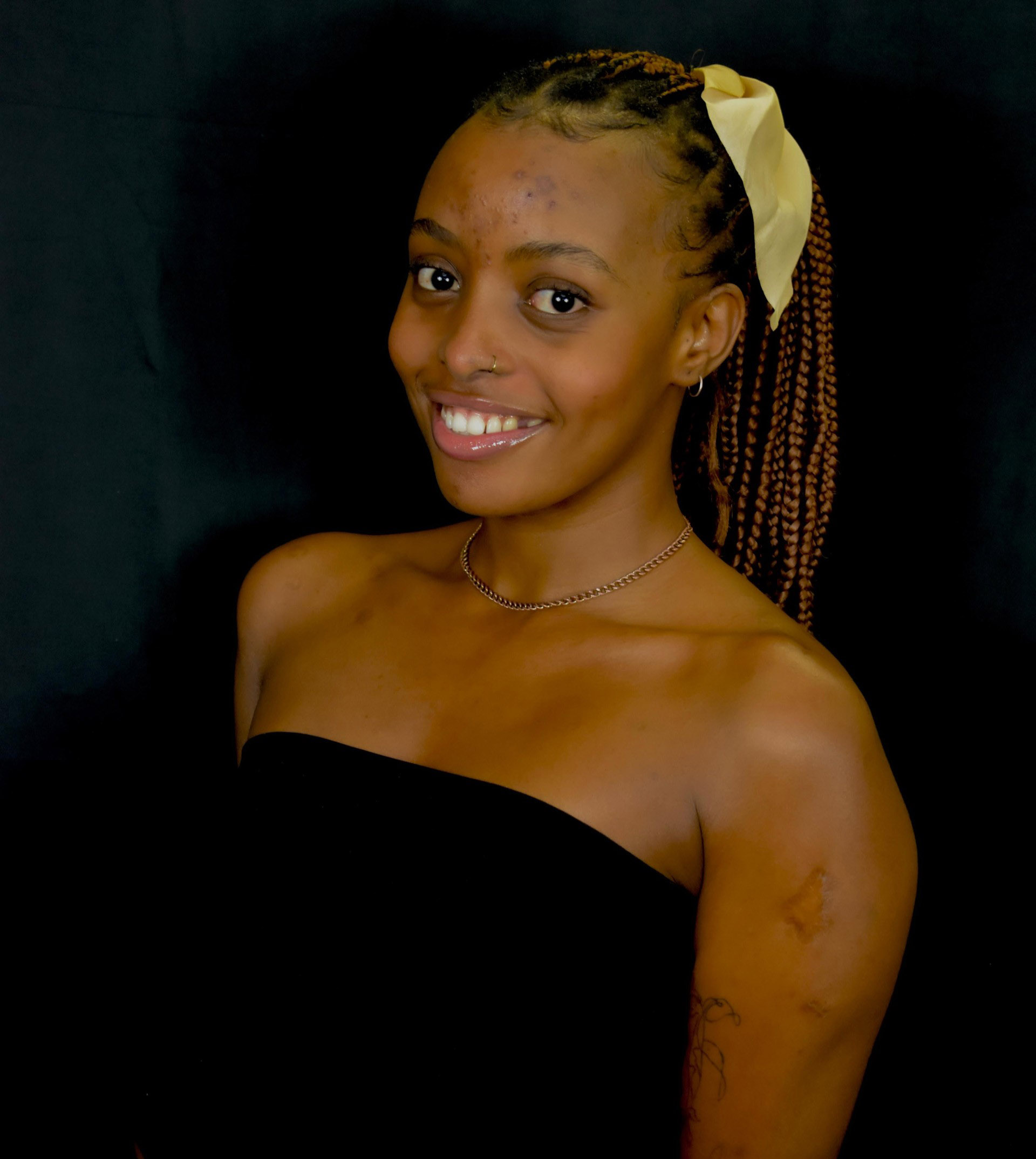
Olwethu Dumzela, is a South African filmmaker, director, and writer whose work delves into the intricate layers of human behaviour, social structures, and the worlds we build, both real and imagined. She holds a BA in Motion Picture Medium and BA Honours in Motion Picture Medium, now pursuing her MA specialising in Drama and Film Studies. She is deeply inspired by the transformative power of cinema, she uses film not just as a tool for storytelling but as a mirror for society reflecting its contradictions, fragility, and beauty. Her stories often bridge the space between factual and fiction blending the emotional truth of realism with the imaginative possibilities of narrative fiction to create deeply textured, immersive worlds.
Her filmmaking is rooted in the belief that cinema can redefine how stories are told and who gets to tell them, especially within the African and South African context. Seeking to
challenge form and genre, creating spaces and cinematic languages that have not yet been tested. Through her work, she strives to give a voice to the voiceless, using film as a
means to amplify stories of those who have been overlooked or silenced by history and society. Her commitment lies in pushing the boundaries of what African cinema can be, visually, emotionally, and thematically, while remaining grounded in authenticity, cultural
truth, and the spirit of her roots. She believes film is both a legacy and a call to action. She envisions her work as a bridge between generations, speaking to the old, the young, and those yet to come, urging them to question, to dream, and to experiment beyond the familiar. As a Black South African woman in the film industry, she is passionate about carving out space for more voices like hers and inspiring others to step into their power unapologetically. Believing that film captures memory, time, and experience like no other medium, she approaches each project with emotional honesty and bold experimentation.
She continues to push herself across the disciplines of writing and directing, and her creative presence and voice in academia, seeking to craft films that provoke, challenge, and connect, reminding audiences of cinema’s enduring ability to shape both personal and collective histories.