

Documentaries that Delve Deeper, to Discover, Inspire and Celebrate the Human Spirit at the 46th Durban International Film Festival – 17 to 27 July 2025
This year’s Durban International Film Festival documentary programme digs deep to uncover the harsh reality of coltan mining, walks us through the streets of downtown Warsaw, Poland, and unveils the secrets of life in Iran and Sudan. The systemic exploitation of vulnerable people by one of the wealthiest countries in the world contrasts sharply with the quiet dignity and often hilarious antics of elderly people in a retirement home. There are moments of joy as we hear from the pioneering Marlee Martin, follow the much-feted and sorely missed Pigcasso, the ‘million-dollar pig,’ and learn about the intricacies of a ‘mistress dispeller’ in China who mends broken romantic relationships.
The world seems smaller than ever, and we are all more connected – often in ways we don’t even realise. The plight of miners in a country thousands of miles away is tied up in our daily activity as we scroll through our smartphones, the source of the essential minerals which power our modern-day technology is often murky, and in Of Mud and Blood the harsh reality of those who collect coltan and how the grey gold is mined is revealed. It’s not a pretty story, and Numbi, a small village in the Democratic Republic of Congo, is at the heart of it. Miners in Numbi work tirelessly, often facing exploitation and conflict. The documentary captures the harsh realities and hopes of its inhabitants, shedding light on their struggles and dreams.
More than 10 000 kilometres away, in the drought-stricken Indian rural region of Maharashtra, people are just as desperate and face poverty and immeasurable suffering. Adverse climatic conditions, artificially low prices on the world market, rising imports and lack of regulation are pushing farmers into bottomless debt, deep poverty and an unbearably high suicide rate. Some, overwhelmed by debt, fatally poison themselves with pesticides. In Marching in the Dark, it’s the women left behind with substantial unpaid bank loans, the burden of raising children, and the responsibility of managing failing farms who begin a silent rebellion against a patriarchal society. They meet with a local psychologist to question orthodox practices and begin a journey where ultimately; they are more than widows of broken men.
While these women find courage and comfort in each other and begin to unshackle themselves from societal expectations, Gail Eastwood-Ritchey must face a murder charge after she is connected to a dead body thirty years after she left her newborn baby in the woods outside the Cleveland suburb of Euclid. Identified at the time as “Geauga’s Child,” named after Ohio’s Geauga County, with a gravestone inscribed, “Geauga’s Child lies here now in safety – just too late,” is Baby Doe. We witness the unlikely face of a murderer, a conservative, married, suburban woman with three children and a dark secret.
Patrice: The Movie vividly shares the struggles of Patrice Jetter, a school crossing guard, disability rights advocate and Special Olympics athlete from New Jersey. She wants to marry the love of her life, Garry Wickham, who is also disabled. Marriage would mean a loss of their government benefits, and when Patrice is faced with the breakdown of her accessible van, her financial and emotional crises become very real. She encourages friends to rally in support of a bill which would dissolve the ‘marriage penalty’ faced by couples with disabilities, and her tenacity and humour make for a journey of love, laughter and surprise.
One of the greatest advantages of a film festival is the ability to travel the world without a passport or visa. Beginning in Warsaw, Poland, Arjun Talwar, an immigrant from India, struggles to integrate. With the help of his friend Mo, another immigrant-turned-filmmaker, Arjun uncovers the mysteries of ‘Wolf Street’ or ‘Ulica Wilcza,’ a street which exposes a kaleidoscope of contradictions and anxieties. They reveal a web of charming characters: a postman who, along with letters, delivers remedies for loneliness; an exile from Damascus building a replica of his hometown; and a wandering brass band, among many others. In Letters from Wolf Street the director discovers that they are like himself—people who live between the past and the present, between an imagined homeland and a real one. The film throws stereotypes to the wind as it tries to navigate the fictitious boundaries between neighbours. Poland, often perceived as homogenous, unwelcoming, and right-wing, is faced with a mirror held up by a foreign filmmaker who creates a witty and personal portrait of his adopted country.
Shajane Suliman, Maha Elfaki, Ahmed Muzamil, Rufaida, Khattab and Hamza are young activists and artists in Sudan. They want their struggle to be remembered, and filmmaker Hind Meddeb captures the resilience of their generation against a corrupt military responsible for war crimes while addressing Sudan’s ongoing crisis, often overlooked globally. Sudan, Remember Us captures a moment of hope and defiance among these young activists in Khartoum following the overthrow of dictator Omar Al-Bashir after a 30-year regime marked by violence, including genocide in Darfur.
Against the backdrop of another oppressive regime, navigating the contrast between domestic freedom and external oppression is all too familiar to Farahnaz Sharifi, an award-winning Iranian filmmaker and editor exiled in Germany since 2022. Born during the Islamic revolution in Iran in 1979, she captures moments of joy and defiance in her daily life in My Stolen Planet. In this homemade history we share a turning point in Farah’s life when, in the fall of 2022, after Iran’s enforced forgetting culminates in the “Women, Life, Freedom” uprising sparked by Mahsa Amini’s death.
While in Sudan and Iran generations fight against repression, in China Wang Zhenxi fights against infidelity. Mistress Dispeller looks at the new industry which has emerged devoted to helping couples stay married in the face of infidelity. As a “mistress dispeller,” Wang Zhenxi is hired to maintain the bonds of marriage — and break up affairs — by any means necessary. The film follows a real, unfolding case of infidelity as teacher Wang attempts to bring a couple back from the edge of crisis.
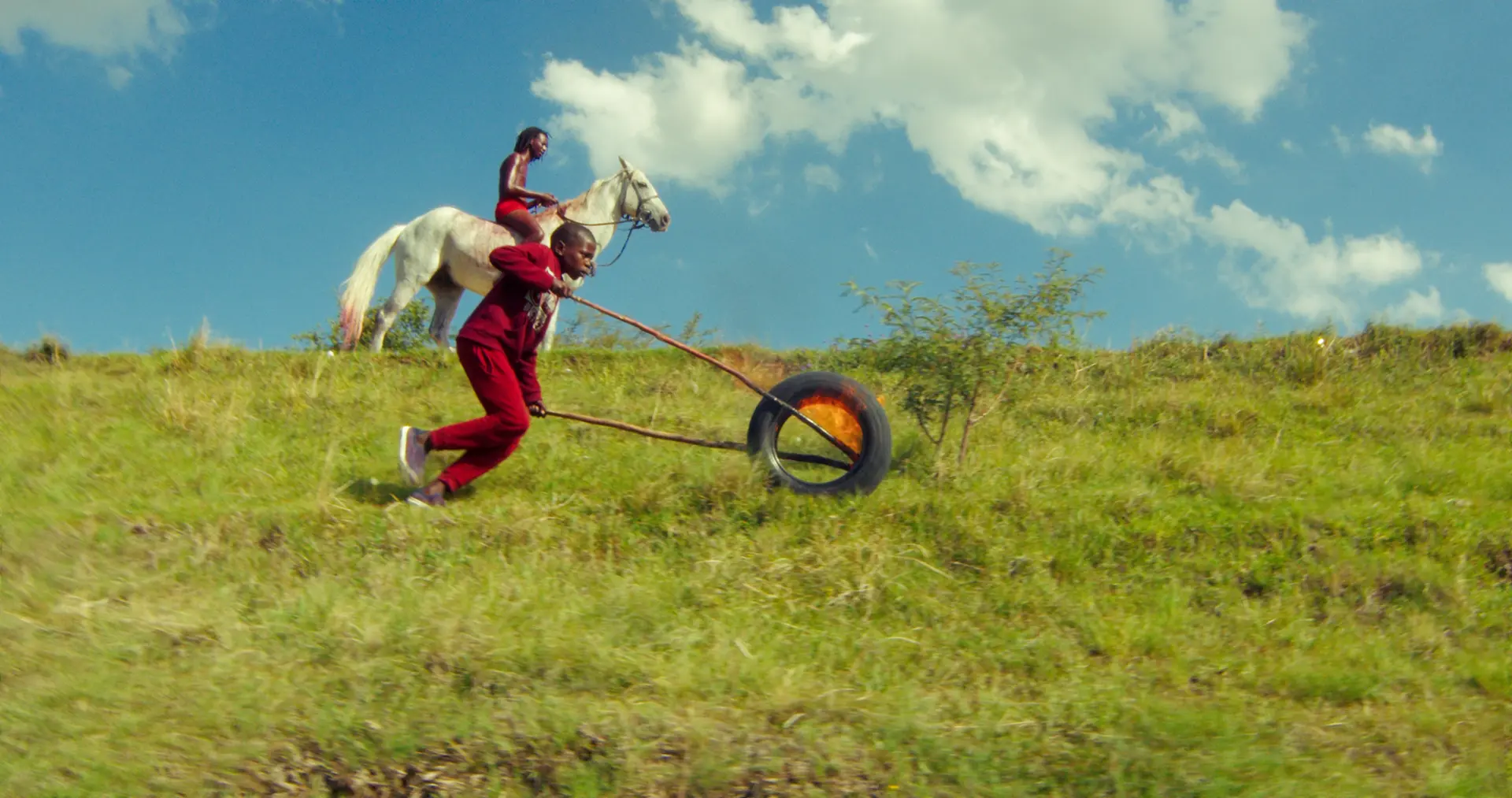
An escape from real-life drama is offered by Ancestral Visions of the Future, which blurs the lines between reality and reconstruction. In this elegy for a city and a people caught between the weight of memory and the inevitability of loss, the film is a poetic ode to cinema. Through fragmented narratives and mythic imagery, the Lesotho-born, Berlin-based filmmaker Lemohang Jeremiah Mosese blends docufiction, essayistic narration, and mythical imagery to explore his childhood in Lesotho, his exile in Germany, and broader themes of identity.
Marlee Matlin explores her identity in Marlee Matlin: Not Alone Anymore as she reveals her life and the challenges she faced before and after becoming the first Deaf actor to win an Academy Award, thrust into the spotlight at 21 years old. The documentary covers her battles with addiction, childhood sexual abuse, and Hollywood’s limited roles for Deaf actors. It highlights her resilience, sobriety, and marriage to Kevin Grandalski, with whom she built a family, and offers a Deaf perspective in the film told by silent ASL scenes, captions, and a mix of home videos and film clips.
Closer to home is The Home, a good-humoured portrait of the oldest and largest Jewish homes in South Africa, which works as a gentle observational comedy. The occupants kvetch about companions while they are attended, with notable affection, by carers who are mostly Xhosa-speaking Black women working on minimum wages This wry social portrait is also a record of a microcosmos of South Africa today, where a legacy of racial and economic segregation still lingers.
Rounding off our trip around the globe, buoyed by the resilience of young activists, amused by contrary octogenarians and inspired by trail breakers, we are finally introduced to Pigcasso: Million Dollar Pig, who resides in the heart of South Africa’s Franschhoek Valley. Rescued by animal rights activist Joanne Lefson, Pigcasso defies all odds to become the world’s first painting pig, creating breathtaking artworks that challenge perceptions of animal intelligence and artistic expression. Pigcasso’s story is deeply intertwined with Jo’s own journey, one of dedication, love, and the ever-present reality that time is fleeting. As Pigcasso’s health declines, Jo must come to terms with the inevitable, knowing that their shared adventure has left an indelible mark on the world. With never-before-seen footage, intimate reflections, and a visually rich narrative that mirrors the hero’s journey, Pigcasso: Million Dollar Pig is a testament to the power of creativity, resilience, and the bond between humans and animals.
Whether it’s insight, information, another point of view or porcine paintings you are looking for – they are all at this year’s Durban International Film Festival. After watching these entertaining and thought-provoking films, you are bound to be the most sought-after guest at the dinner table.